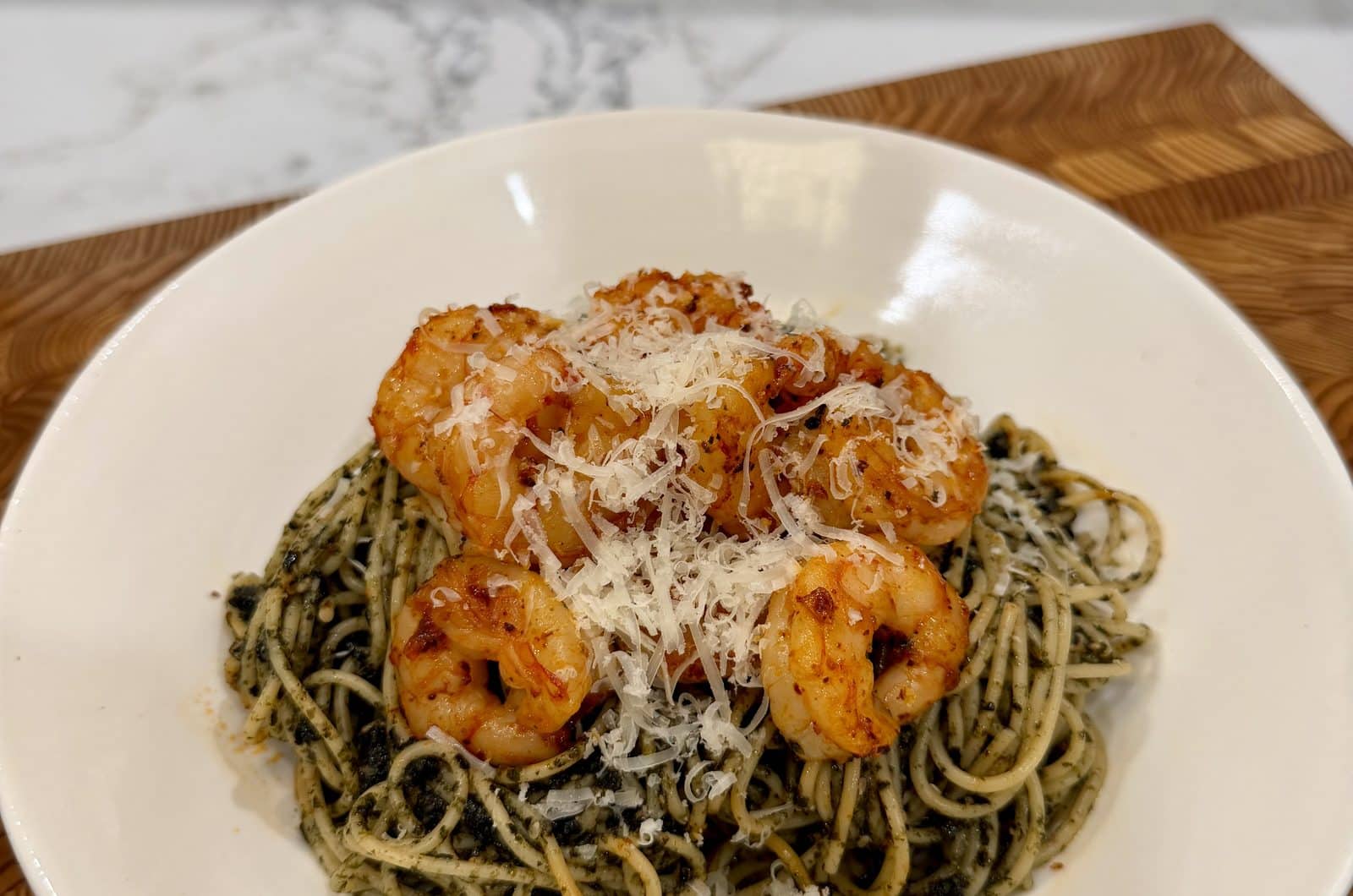
If you love Japanese-inspired pasta dishes, this Nori Pasta with Chili Oil Shrimp is about to become your newest obsession. Inspired by the viral nori pasta trend, this recipe transforms simple seaweed sheets and toasted sesame seeds into a rich, creamy, umami-packed sauce. The best part? There’s no heavy cream involved! Instead, a combination of nori, sesame oil, soy sauce, Parmesan cheese, and egg yolk creates a silky sauce that coats every strand of spaghetti.
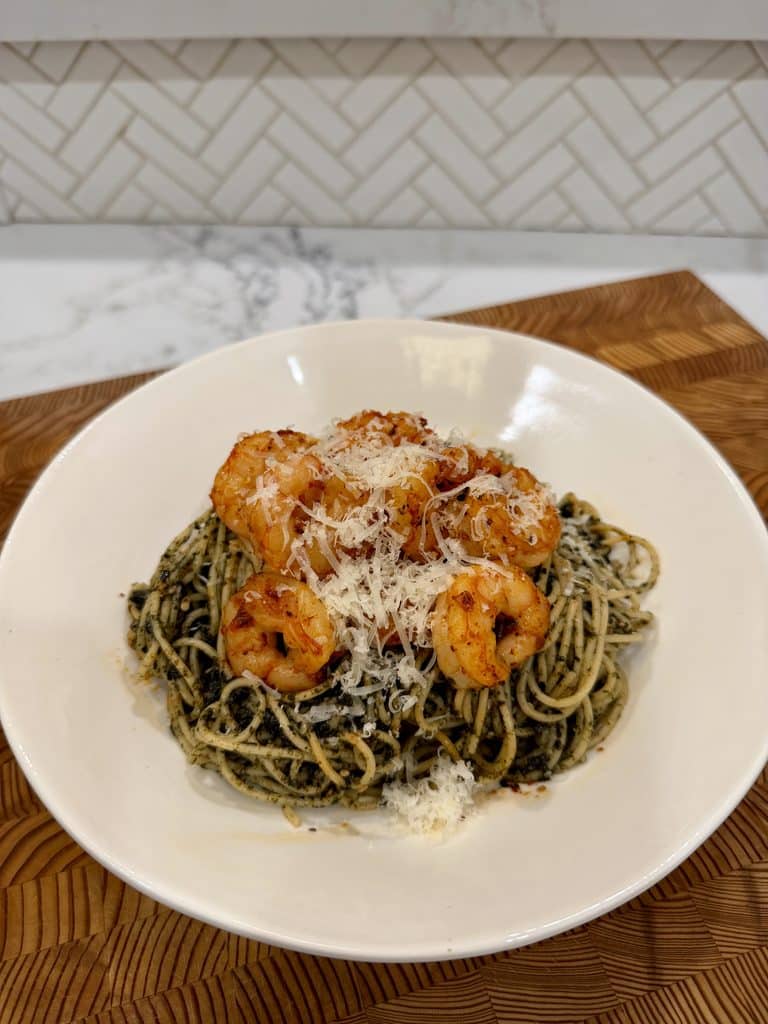
What makes this nori pasta recipe so special is how easily everything comes together. Rather than spending time simmering a sauce on the stove, you’ll blitz nori sheets and roasted sesame seeds in a food processor, then mix them with a handful of pantry staples to create a flavorful paste. Once your spaghetti is cooked, the residual heat from the pasta and a splash of reserved pasta water help transform that paste into a glossy, creamy sauce.
Of course, we can’t forget the chili oil shrimp! Juicy shrimp are pan-fried in fragrant garlic chili oil until tender and coated in spicy, garlicky goodness. The heat from the shrimp perfectly balances the savory, nutty flavors of the seaweed pasta, adding another layer of flavor and protein to the dish. It’s a combination that’s comforting, slightly spicy, and packed with umami in every bite.
Whether you’re looking for a quick weeknight dinner, a creative way to use leftover nori sheets, or a restaurant-worthy pasta dish to impress someone, this recipe checks all the boxes. It’s easy to customize, comes together in about 25 minutes, and tastes far more complicated than it actually is. If you’re a fan of Japanese fusion pasta, sesame noodles, or anything with chili oil, you’re going to love this one!
Ingredients You’ll Need
For the Nori Sesame Sauce
- Nori sheets or seaweed snacks: The star ingredient! Nori adds a deep, savory, ocean-inspired umami flavor. Both full-sized roasted nori sheets and packaged seaweed snacks work, although seasoned snacks may require adjusting the soy sauce and sesame oil.
- Roasted sesame seeds: Add a rich, nutty flavor and help create the body of the sauce. Roasted sesame seeds are preferred over raw sesame seeds for their deeper flavor.
- Sesame oil: Enhances the toasted, nutty flavors of the sesame seeds and seaweed. A little goes a long way.
- Soy sauce: Adds saltiness and savory depth to the sauce.
- Sugar: Balances the saltiness of the soy sauce and the earthiness of the nori.
- Grated Parmesan cheese: Adds richness, saltiness, and another layer of umami. Freshly grated Parmesan melts more smoothly than pre-shredded cheese.
- Egg yolk: Creates a silky, creamy texture without needing heavy cream, similar to the technique used in carbonara.
- Reserved pasta water: The starch in the pasta water helps loosen the paste and emulsify it into a smooth sauce that clings to the noodles.
For the Pasta
- Thin spaghetti: Thin spaghetti is perfect for this recipe because the delicate strands absorb and hold onto the nori sesame sauce. You can also use regular spaghetti.
- Boiling water: Used to cook the pasta until al dente.
- Soy sauce: Added directly to the boiling water to lightly season the pasta as it cooks.
For the Chili Oil Shrimp
- Shrimp: Use peeled and deveined shrimp for convenience. Fresh or thawed frozen shrimp both work.
- Garlic chili oil: Adds heat, garlic flavor, and a beautiful reddish color to the shrimp. Use your favorite store-bought or homemade garlic chili oil.
- Salt: Season to taste, depending on how salty your chili oil is.
Ingredient Substitutions and Variations
- Nori sheets: Substitute full-sized nori sheets with roasted seaweed snacks. Since seaweed snacks are often seasoned with salt and oil, adjust the other seasonings accordingly.
- Thin spaghetti: Use regular spaghetti, linguine, angel hair, or even udon noodles. Cooking times will vary.
- Roasted sesame seeds: Substitute with a small amount of tahini for a similar nutty flavor, although the texture and taste will be slightly different.
- Soy sauce: Use tamari for a gluten-free alternative, along with gluten-free pasta.
- Parmesan cheese: Substitute with Pecorino Romano for a sharper, saltier flavor. Start with less because Pecorino is typically saltier.
- Egg yolk: Omit the egg yolk for an egg-free version. The sauce will be less rich, but additional pasta water and a little sesame oil can help achieve a smooth consistency.
- Shrimp: Swap shrimp for scallops, salmon, chicken, or crispy tofu.
- Garlic chili oil: Substitute with chili crisp, homemade chili garlic oil, or a combination of sesame oil, garlic, and red pepper flakes.
- Spice level: Adjust the amount of garlic chili oil based on your preference. You can also drizzle extra chili oil over the finished pasta.
Tips for the Best Nori Pasta
1. Use roasted nori for maximum flavor. Roasted seaweed has a deeper, more savory flavor than unroasted seaweed. If you’re using packaged seaweed snacks, taste them first because some brands contain additional salt or seasonings.
2. Blend the seaweed and sesame seeds finely. The finer the mixture, the smoother your finished sauce will be. Break the nori sheets into smaller pieces before adding them to the food processor.
3. Don’t forget to reserve the pasta water. This is one of the most important ingredients! The starchy water helps turn the thick nori paste into a silky sauce.
4. Mix the pasta off the heat. Since the sauce contains an egg yolk, adding the pasta to the sauce away from direct heat helps prevent the egg from scrambling. Add hot pasta water gradually while tossing continuously.
5. Cook the shrimp separately. Pan-frying the shrimp in garlic chili oil gives them a flavorful coating and keeps their texture tender. Add them to the pasta just before serving.
Frequently Asked Questions
What is nori pasta?
Nori pasta is a Japanese-inspired fusion dish that incorporates roasted seaweed into a pasta sauce. In this version, nori is blended with roasted sesame seeds, soy sauce, sesame oil, Parmesan, and egg yolk to create a savory, nutty, creamy sauce.
Does nori pasta taste fishy?
Nori pasta has a mild ocean-like flavor, but it shouldn’t taste overwhelmingly fishy. The sesame seeds, Parmesan cheese, and soy sauce help balance the seaweed’s flavor, creating a savory, umami-rich dish.
Can I use seaweed snacks instead of nori sheets?
Absolutely! Roasted seaweed snacks work well in this recipe. Just remember that many seaweed snacks are already seasoned with salt and oil, so you may want to reduce the amount of soy sauce or sesame oil.
Can I make nori pasta without a food processor?
Yes, although the sauce may be slightly coarser. Finely crumble the nori sheets and grind the sesame seeds using a mortar and pestle or a spice grinder, then combine with the remaining sauce ingredients.
Why do you add egg yolk to the sauce?
Egg yolk helps create a rich, silky texture and allows the sauce to coat the pasta without heavy cream. It’s similar to the technique used in traditional carbonara.
Can I make this pasta without raw egg yolk?
Yes! You can omit the egg yolk and use extra pasta water to loosen the sauce. For a creamier egg-free version, try adding a small amount of tahini. If using egg yolk, keep in mind that hot pasta alone may not heat it sufficiently for food safety; use pasteurized egg yolk or gently heat the combined sauce to 160°F.
Can I make this recipe ahead of time?
This pasta is best enjoyed fresh because the sauce can thicken as it cools. You can prepare the dry nori and sesame mixture ahead of time, but I recommend combining the sauce and pasta right before serving.
How do I store and reheat leftovers?
Store leftovers in an airtight container in the refrigerator for up to 3 days. Reheat gently in a skillet with a splash of water to loosen the sauce. If using regular, unpasteurized egg yolk, make sure the sauce has been cooked safely before storing leftovers.
2
servings10
minutes15
minutes25
minutesIngredients
8 oz 8 thin spaghetti
1/4 cup 1/4 soy sauce
water for boiling
- Seaweed Paste
3 3 roasted nori sheets
2 tbsp 2 roasted sesame seeds
1.5 tbsp 1.5 sesame oil
1.5 tbsp 1.5 soy sauce
1 tsp 1 sugar
1/4 cup 1/4 grated parmesan
2 2 pasteurized egg yolks
1/4 cup 1/4 reserved pasta water
pinch of salt, adjust for taste
- Chili Oil Fried Shrimp
1/2 lb 1/2 shrimp, peeled and deveined
2 tbsp 2 garlic chili oil
pinch of salt, adjust for taste
- Toppings
grated parmesan
garlic chili oil
Directions
- Prepare the nori sesame mixture.
Tear the nori sheets into smaller pieces and add them to a food processor with the roasted sesame seeds. Pulse until finely ground. - Make the sauce paste.
Transfer the ground nori mixture to a large heatproof bowl. Mix in sesame oil, soy sauce, sugar, grated Parmesan, and pasteurized egg yolk until a thick paste forms. - Cook the pasta.
Bring a large pot of water to a boil and season with soy sauce. Add thin spaghetti and cook until al dente according to package instructions. Reserve at least ½ cup of pasta water before draining. - Combine the pasta and sauce.
Add the hot drained pasta to the nori paste and toss vigorously. Gradually add reserved pasta water until the noodles are evenly coated in a creamy, glossy sauce. For food safety when using egg yolk, gently heat the combined sauce while stirring until it reaches 160°F, without overheating or scrambling the egg. - Cook the chili oil shrimp.
Heat garlic chili oil in a skillet over medium heat. Add shrimp, season lightly with salt, and cook for approximately 2–3 minutes per side, depending on size, until opaque and cooked through to 145°F. - Assemble and serve.
Twirl the nori pasta onto serving plates and top generously with the garlic chili oil shrimp. Spoon any remaining chili oil from the pan over the pasta, top off with more Parmesan, and serve immediately.