This Creamy Mentaiko Udon is a rich, savory Japanese inspired noodle dish made with thick and chewy udon tossed in a silky mentaiko cream sauce. The sauce comes together with butter, heavy cream, Japanese mayo, soy sauce, mirin, mentaiko, and freshly grated Parmesan for the perfect balance of creamy, salty, slightly sweet, and umami flavors. Best of all, frozen udon cooks in just a few minutes, making this an easy meal when you want something comforting without spending all night in the kitchen.
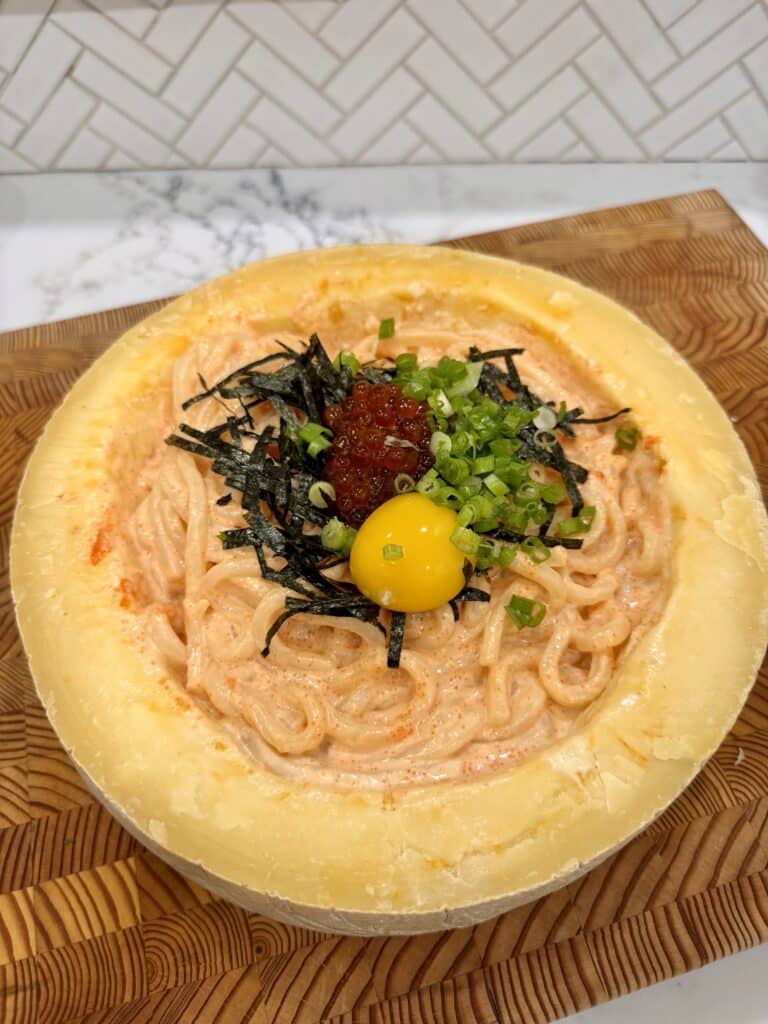
Mentaiko is seasoned pollock roe with a salty, savory flavor and subtle heat that works especially well in creamy sauces. Combining it with heavy cream and Japanese mayo mellows its intensity while still allowing that signature seafood flavor to come through. Soy sauce and mirin add another layer of umami and sweetness, while butter and Parmesan make the sauce extra rich and help it cling to every chewy strand of udon.
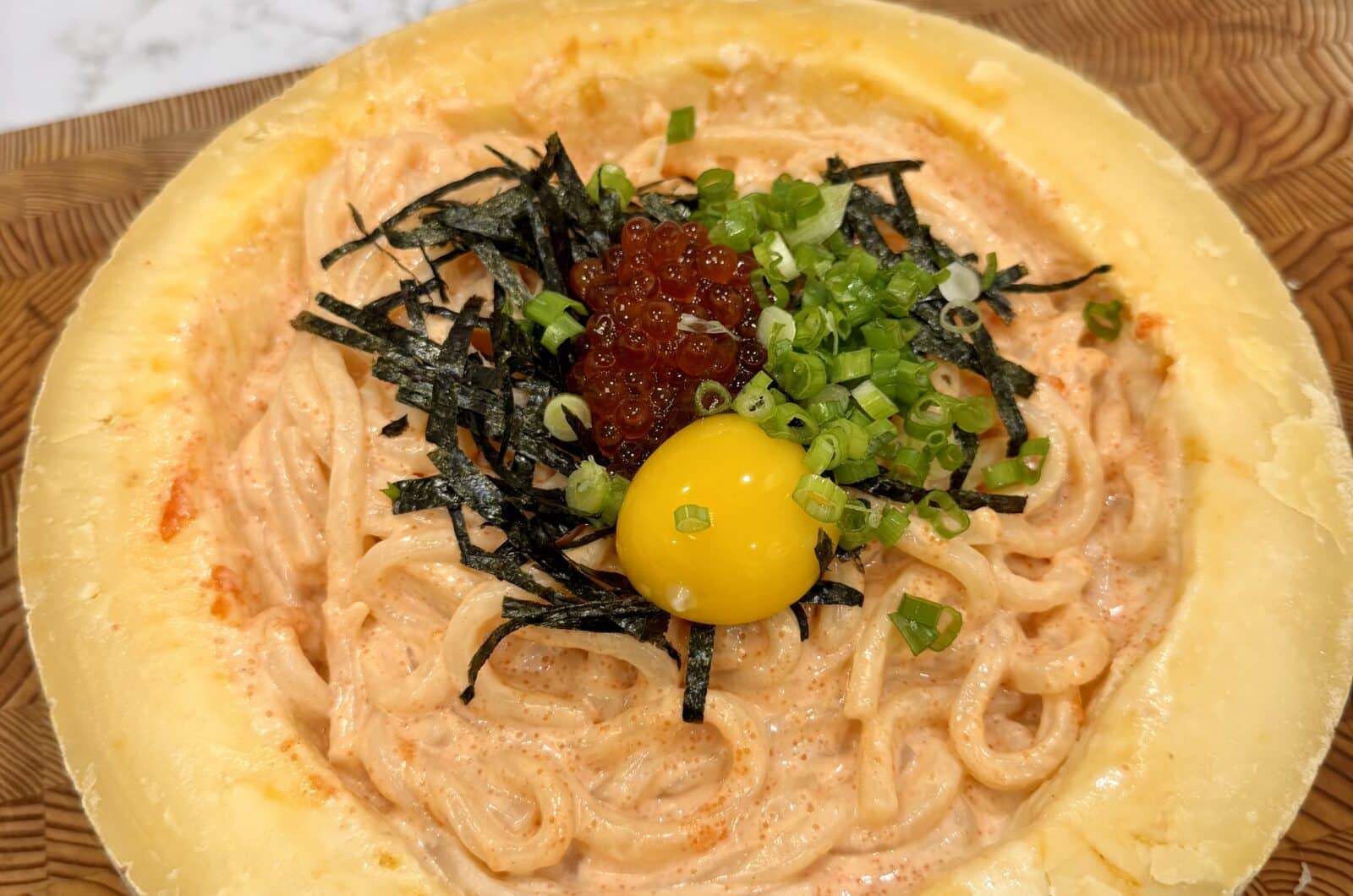
I originally made this creamy mentaiko udon in a leftover cheese wheel, tossing the finished noodles inside the wheel for an extra coating of melted cheese. It makes for an incredibly fun presentation, but you absolutely do not need a cheese wheel to make this recipe. Everything is cooked and finished in a pan, and the cheese wheel is simply an optional final step. If you’re making it at home without one, I highly recommend finishing the noodles with plenty of freshly grated Parmesan for that extra savory, cheesy flavor.
The toppings take this creamy udon to another level. I finish mine with green onions, shredded seaweed, ikura, and a rich egg yolk right in the center. Break the yolk and mix it through the hot noodles for an even silkier sauce, then get a little ikura in each bite for pops of salty, briny flavor. It’s an indulgent bowl of noodles that looks impressive but is surprisingly simple to put together.
Ingredients You’ll Need
Frozen udon: Frozen udon noodles are my favorite for this recipe because they’re thick, chewy, and cook in just a few minutes. Their bouncy texture holds up particularly well to the rich cream sauce.
Water: Used to quickly boil and loosen the frozen udon. Be careful not to overcook the noodles since they’ll continue heating when tossed in the sauce.
Mentaiko Sauce
Butter: Creates a rich base for the sauce and complements the salty mentaiko.
Heavy cream: Gives the sauce its creamy, silky consistency and mellows some of the stronger seafood flavor of the mentaiko.
Japanese mayo: Adds additional creaminess, richness, and a subtle tang. Japanese mayo has a distinctive savory flavor that works especially well with mentaiko.
Soy sauce: Adds saltiness and umami that deepens the flavor of the cream sauce. You only need a little because the mentaiko and Parmesan are already salty.
Mirin: Adds a subtle sweetness that helps balance the salty and savory ingredients in the sauce.
Mentaiko paste: The star of the dish. Mentaiko is seasoned pollock roe that gives the sauce its signature salty, savory, slightly spicy seafood flavor.
Freshly grated Parmesan cheese: Adds nuttiness, saltiness, and extra richness while helping the sauce cling to the udon. Even if you’re skipping the cheese wheel, I highly recommend freshly grated Parmesan.
Toppings
Green onions: Add freshness and a mild onion flavor that cuts through the rich sauce.
Egg yolk: Adds another layer of richness. Break it over the hot noodles and mix everything together for an even silkier texture.
Ikura: Salmon roe adds beautiful color and little bursts of salty, briny flavor.
Shredded seaweed: Adds savory ocean flavor and gives the finished udon a classic Japanese inspired garnish.
Substitutions and Variations
- Frozen udon: Fresh or shelf stable udon can also be used. Any type of noodles or pasta also work really well.
- Heavy cream: Half and half can be used for a lighter sauce, although it won’t be quite as rich.
- Japanese mayo: Regular mayonnaise can work in a pinch, but Japanese mayo gives the sauce a richer, more savory flavor.
- Parmesan: Pecorino Romano can be substituted for a sharper, saltier cheese, but use a little less at first.
- Mirin: A small amount of sugar can help replace the sweetness if you don’t have mirin, though it won’t provide exactly the same flavor.
- Ikura: Completely optional. Leave it off if you don’t have it or prefer a less seafood forward dish.
- Egg yolk: You can skip the raw yolk or use a pasteurized egg yolk if raw egg is a concern.
- Cheese wheel: Completely optional! Tossing the udon in a cheese wheel adds extra cheese and makes for a fun presentation, but the noodles are already completely finished in the pan.
- Spicy version: Add extra spicy mentaiko, shichimi togarashi, or chili oil for additional heat.
Frequently Asked Questions
What is mentaiko?
Mentaiko is seasoned pollock roe commonly used in Japanese cuisine. It has a salty, savory seafood flavor and is often seasoned with chile, giving it some heat. It’s commonly paired with rice, pasta, and other noodles.
What does creamy mentaiko udon taste like?
It’s creamy, buttery, savory, cheesy, and full of umami with a distinct briny flavor from the mentaiko. The cream, mayo, and Parmesan mellow the mentaiko and create a rich sauce that pairs especially well with chewy udon.
Do I need a cheese wheel?
No! The cheese wheel is completely optional. I happened to have a leftover cheese wheel and used it to finish my udon, but the entire recipe is prepared in a pan. Tossing the finished noodles inside the wheel simply gives them another coating of cheese.
What should I use if I don’t have a cheese wheel?
Freshly grated Parmesan! Add it directly to the sauce and grate some more over the finished noodles. You’ll still get plenty of cheesy, savory flavor without the wheel.
Can I use frozen udon without thawing it?
Yes. Frozen udon can generally go directly into boiling water. It only needs a short amount of time to loosen and heat through, so follow the cooking instructions on your specific package.
How do I keep the cream sauce from becoming too thick?
Reserve some of the udon cooking water before draining. If your sauce gets too thick, add a small splash at a time until it becomes silky enough to coat the noodles.
Why shouldn’t I boil the mentaiko sauce?
High heat can cause a cream based sauce to separate and can overcook the mentaiko. Once the cream is added, keep the heat relatively gentle, and I prefer incorporating the mentaiko toward the end.
Is the egg yolk necessary?
No. It’s an optional topping, but mixing the yolk into the hot noodles makes the sauce even richer and silkier. If using a raw or undercooked egg is a concern, use a pasteurized egg or leave it off.
Can I make creamy mentaiko udon ahead of time?
This recipe is best served immediately. Udon continues absorbing sauce as it sits, so you’ll get the best creamy consistency and chewy noodle texture right after cooking.
2
servings5
minutes10
minutes15
minutesIngredients
2 packs 2 frozen udon
water for boiling
- Mentaiko Sauce
1 tbsp 1 butter
3/4 cup 3/4 heavy cream
2 tbsp 2 japanese mayo
1 tbsp 1 mirin
1 tsp 1 soy sauce
2 1/2 tbsp 2 1/2 mentaiko paste
1/3 cup 1/3 grated parmesan cheese
- Toppings
3 tbsp 3 green onions, sliced
3 tbsp 3 shredded seaweed
1 1 egg yolk
2 tbsp 2 ikura
Directions
- Cook the udon. Bring a pot of water to a boil. Add the frozen udon and cook according to the package directions, just until the noodles loosen and become chewy. Reserve about ½ cup of the cooking water before draining.
- Start the sauce. Melt the butter in a large skillet over medium low heat. Add the heavy cream and stir until combined and warmed through. Keep the sauce at a gentle simmer rather than a rapid boil.
Season the sauce. Stir in the Japanese mayo, soy sauce, and mirin until smooth and combined.
Add the Parmesan. Reduce the heat to low and gradually stir in the freshly grated Parmesan until melted and the sauce becomes smooth and creamy.
Add the mentaiko. turn off the heat and stir the mentaiko paste into the sauce. Taste and add more mentaiko if you want a stronger flavor. - Add the udon. Transfer the cooked udon directly into the skillet and toss until every noodle is thoroughly coated in the creamy mentaiko sauce.
Adjust the consistency. If the sauce is thicker than you’d like, add a splash of reserved udon cooking water and continue tossing until the sauce is silky and clings to the noodles. - Optional cheese wheel finish. If you have a cheese wheel, transfer the already finished creamy mentaiko udon into the wheel and toss the hot noodles against the cheese to pick up an additional coating. This step is purely optional and isn’t necessary for the flavor or texture of the recipe.
- Add the toppings. Transfer the udon to serving bowls and top with green onions, shredded seaweed, ikura, and additional freshly grated Parmesan.
- Finish with egg yolk. Place an egg yolk in the center of each bowl, if using. Break the yolk and mix it into the hot creamy noodles right before eating.