If you love Korean fried chicken and Spam musubi, this recipe combines the best of both worlds! Traditional Spam musubi is a popular Hawaiian snack made with a slice of Spam over rice, wrapped together with nori. But instead of using the usual pan fried Spam, we’re taking things up a notch by coating it in a light batter, covering it in Japanese panko breadcrumbs, and deep frying it until golden and crispy. The result is a crunchy, savory Spam musubi inspired by the irresistible texture of Korean fried chicken.
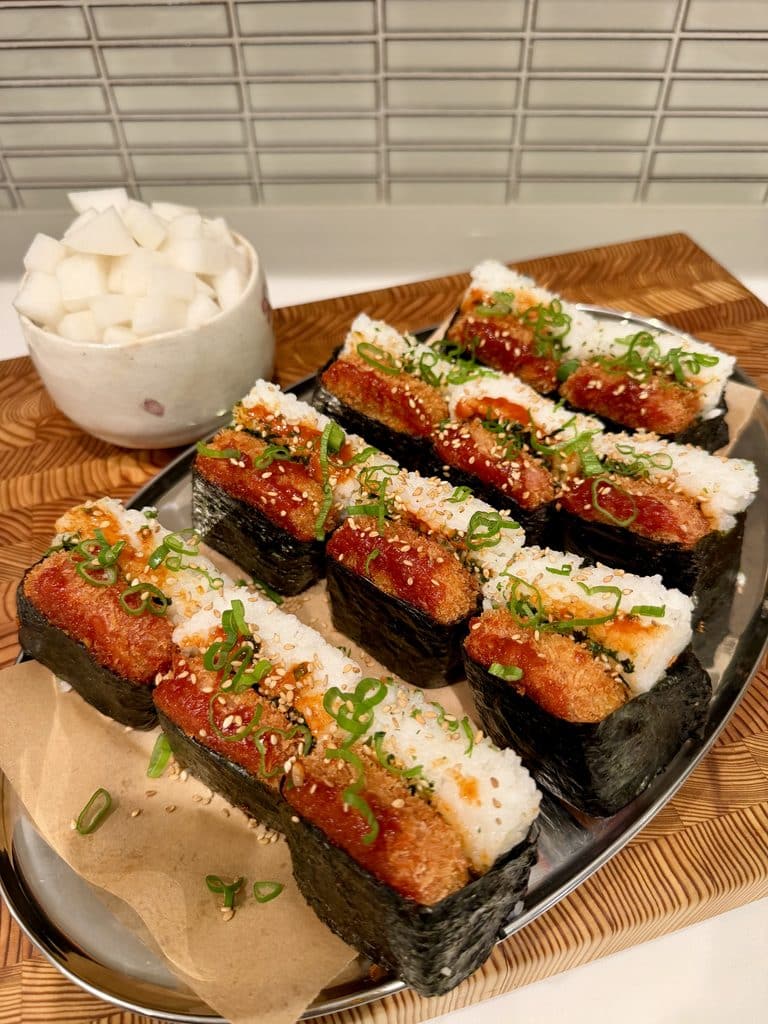
What really makes these Korean fried chicken inspired musubis special is the homemade yangnyeom sauce. If you’ve ever had Korean sweet and spicy fried chicken, you’re probably familiar with that sticky, glossy red sauce that coats every crispy bite. Made with gochujang, ketchup, honey, soy sauce, and Korean chili flakes, this sauce has the perfect balance of sweet, savory, tangy, and spicy flavors. Instead of completely tossing the fried Spam in sauce, I like to brush it on so you get all that delicious flavor while keeping as much of the panko coating crispy as possible.
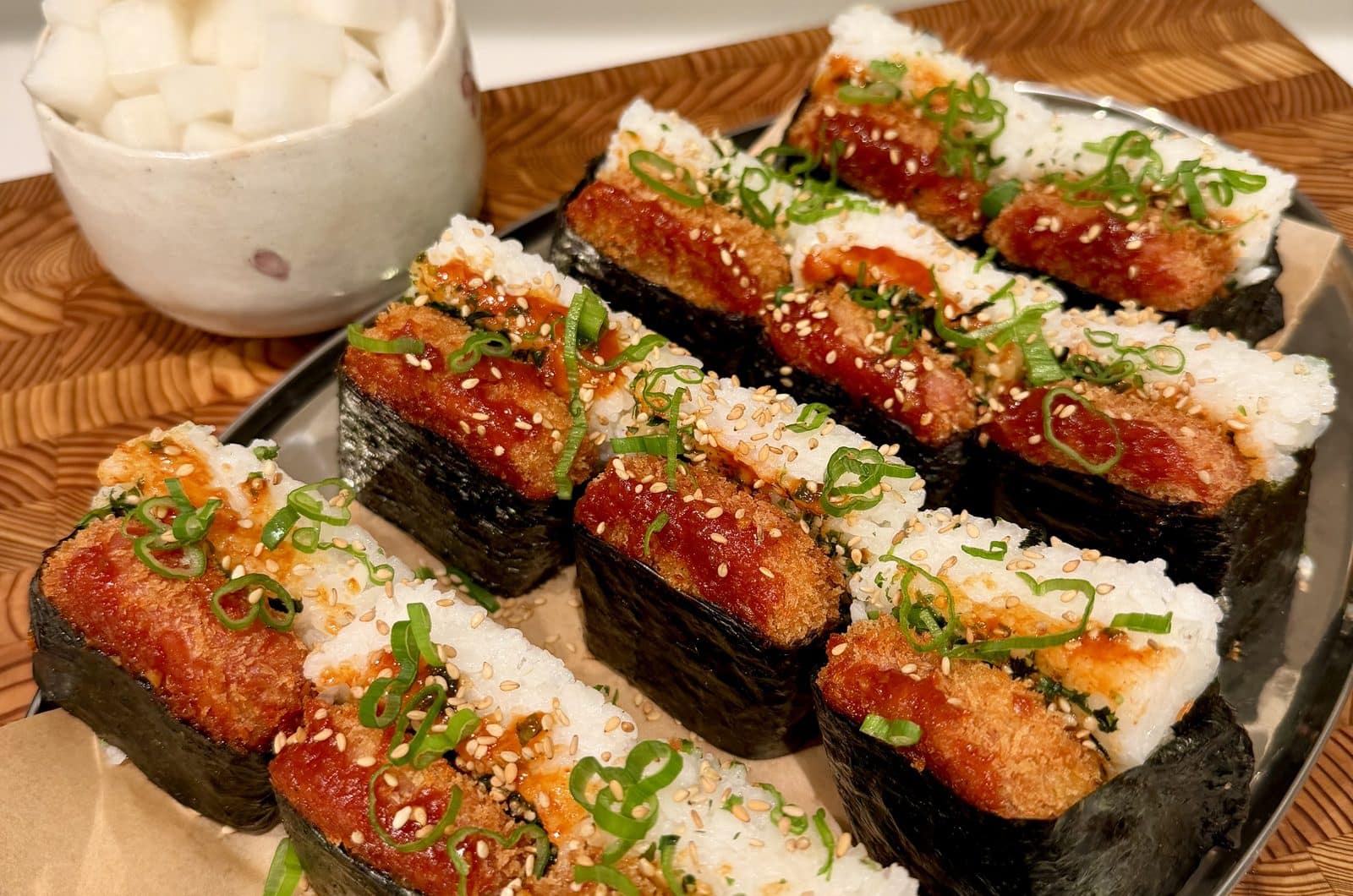
These crispy Spam musubis are also one of my favorite recipes to make for potlucks, parties, and gatherings because they’re easy to grab, fun to eat, and look so impressive on a serving platter. Each musubi has layers of seasoned sushi rice, savory furikake, crunchy fried Spam, and a beautiful coating of yangnyeom sauce, all held together with a strip of nori. They’re individually portioned, making them perfect finger foods for sharing. You can even prep several components ahead of time to make assembling them easier when you’re hosting.
And of course, you can’t have Korean fried chicken inspired anything without Korean pickled radish, also known as chicken mu! These crunchy, sweet and tangy radish cubes are commonly served alongside Korean fried chicken because they help balance out the richness and spice. I love serving them with these musubis for the same reason. Between the crispy panko coating, sticky yangnyeom sauce, fluffy seasoned rice, and refreshing pickled radish, every bite is packed with contrasting textures and flavors. If you’re looking for a creative Spam musubi recipe that’s a little different from the usual, this is definitely one to try!
Why You’ll Love This Recipe
- The ultimate fusion recipe: Combines Hawaiian Spam musubi with the crispy texture and sweet and spicy flavors of Korean fried chicken.
- Extra crispy Spam: Japanese panko breadcrumbs create a light, crunchy coating around the savory Spam.
- Homemade yangnyeom sauce: A glossy, sweet, spicy, and tangy sauce that makes every bite irresistible.
- Perfect for parties and potlucks: Easy to portion, serve, and share with a crowd.
- Customizable spice level: Adjust the gochujang and gochugaru depending on how spicy you like your food.
- Refreshing side dish: Homemade Korean pickled radish adds a crunchy, tangy contrast to the rich musubi.
Ingredients You’ll Need
For the Spam Musubi
Spam: The star of the recipe! Spam has a savory, salty flavor that pairs perfectly with the sweet and spicy yangnyeom sauce. Its firm texture also makes it easy to batter, bread, and fry.
Nori sheets: Roasted seaweed holds the rice and Spam together while adding a slightly salty, umami flavor. Cut the sheets into strips for wrapping each musubi.
Furikake: A Japanese rice seasoning typically made with seaweed, sesame seeds, and other savory ingredients. It adds another layer of umami and texture between the rice and Spam.
Frying oil: Use a neutral oil with a high smoke point, such as canola, vegetable, or peanut oil, to fry the breaded Spam until golden and crispy.
For the Sushi Rice
Sushi rice: Short grain Japanese rice is ideal because it becomes slightly sticky when cooked, helping the musubi hold its shape.
Water: Used to cook the rice until tender and fluffy.
Rice vinegar: Adds a subtle tanginess that balances the richness of the fried Spam and sauce.
Sugar: Adds a touch of sweetness to the seasoned rice.
Sesame oil: Gives the rice a nutty aroma and additional savory flavor.
Salt: Enhances the overall flavor of the rice.
For the Batter and Coating
Egg: Helps bind the batter and creates a coating that allows the breadcrumbs to stick to the Spam.
All purpose flour: Forms the base of the batter and helps create a crispy exterior.
Water: Thins the batter to the right consistency so it coats the Spam evenly.
Japanese panko breadcrumbs: The secret to the extra crispy coating! Panko breadcrumbs are lighter and flakier than traditional breadcrumbs, giving the fried Spam a satisfying crunch.
For the Yangnyeom Sauce
Ketchup: Provides a sweet and tangy tomato base for the sauce.
Gochujang: Korean fermented red chili paste adds heat, sweetness, and a deep savory flavor.
Sugar: Balances the spicy and tangy ingredients while helping create a glossy sauce.
Honey: Adds sweetness and gives the sauce its signature sticky consistency.
Soy sauce: Brings saltiness and umami to balance the sweeter ingredients.
Water: Helps thin the sauce so it’s easier to simmer and brush onto the Spam.
Rice vinegar: Adds acidity to cut through the richness of the fried Spam.
Gochugaru: Korean red chili flakes add another layer of heat and a beautiful red color.
For the Korean Pickled Radish
Korean radish (mu): A crisp, mildly sweet radish that holds its crunch after pickling.
Water: Dilutes the pickling liquid.
Sugar: Gives the radish its characteristic sweetness.
Vinegar: Provides the tangy flavor that balances rich, fried foods.
Salt: Enhances flavor and helps season the radish.
Ingredient Substitutions
- Spam: Substitute with reduced sodium Spam if you prefer a less salty version. You can also use firm tofu or chicken, although cooking times will differ.
- Sushi rice: Calrose rice is a great alternative because it has a similar sticky texture. Avoid long grain rice if possible because it doesn’t hold together as well.
- Nori sheets: Use precut nori strips or cut full size roasted nori sheets into strips yourself.
- Furikake: Substitute with toasted sesame seeds and crushed roasted seaweed.
- Japanese panko: Regular breadcrumbs can work, but the coating will be finer and less airy.
- Gochujang: Use a mild gochujang for less heat. Sriracha can work in a pinch, although the flavor will be different.
- Gochugaru: Substitute with a small amount of crushed red pepper flakes or omit for a milder sauce.
- Honey: Maple syrup or additional sugar can be used as an alternative sweetener.
- Rice vinegar: Apple cider vinegar or white vinegar can work, but you may need to adjust the amount because the acidity differs.
- Korean radish: Daikon radish is the closest substitute and works beautifully for Korean pickled radish.
Frequently Asked Questions
What is Korean fried chicken inspired Spam musubi?
It’s a fusion recipe that combines Hawaiian Spam musubi with the crispy coating and sweet and spicy yangnyeom sauce commonly associated with Korean fried chicken. Instead of simply pan frying the Spam, it’s battered, coated in Japanese panko, deep fried, and brushed with homemade yangnyeom sauce.
Can I make Korean fried chicken Spam musubi ahead of time?
Yes! For the best results, prepare the pickled radish and yangnyeom sauce ahead of time. You can also slice the Spam and prepare the dry coating ingredients in advance. I recommend frying and assembling the musubis closer to serving so the coating stays crispy and the nori doesn’t become too soggy.
How do I keep the fried Spam crispy?
Make sure the frying oil is hot enough before adding the breaded Spam. After frying, place the Spam on a wire rack instead of paper towels to prevent steam from softening the coating. Brush on the yangnyeom sauce right before assembling and serving.
Can I air fry the Spam instead of deep frying it?
Yes, although the coating may not be quite as evenly golden or crispy. Lightly spray the breaded Spam with oil and air fry at 390°F for approximately 8 to 12 minutes, flipping halfway through, until the coating is golden and cooked through.
Is yangnyeom sauce very spicy?
It depends on how much gochujang and gochugaru you use. The ketchup, honey, and sugar help balance the heat, creating a sweet and spicy sauce rather than an overwhelmingly spicy one. You can reduce the chili ingredients for a milder version.
What is Korean pickled radish?
Korean pickled radish, also called chicken mu, is a popular side dish served with Korean fried chicken. It’s made by pickling cubed Korean radish in a mixture of vinegar, sugar, water, and salt. The result is crunchy, sweet, tangy, and refreshing.
Can I use regular white radish instead of Korean radish?
Yes! Daikon radish is an excellent substitute. It has a similar crisp texture and mild flavor that works well with the sweet and tangy pickling liquid.
4
servings30
minutes30
minutes1
hourIngredients
1 can spam (cut into 8 slices)
4 sheets nori
3 tbsp furikake
neutral oil (vegetable, canola, etc.)
- Sushi Rice
2 cups uncooked sushi rice
2 cups water, or as directed on package
3 tbsp rice vinegar
1 tbsp sugar
1 tsp sesame oil
1/4 tsp salt
- Batter and Coating
1 egg
1/3 cup flour
4 tbsp water, add more if needed
1 1/2 cups japanese panko
- Yangnyeom Sauce
3 garlic cloves, minced
3 tbsp ketchup
2 tbsp gochujang
1 tbsp sugar
2 tbsp honey
1 tsp soy sauce
1 tsp rice vinegar
3 tbsp water
- Pickled Korean Radishes
1 lb korean radish, peeled and cubed
1 cup water
1/2 cup sugar
1/2 cup vinegar
1 tsp salt
- Garnishes
green onions, sliced
sesame seeds
Directions
- Make the Korean pickled radish.
Combine the water, sugar, vinegar, and salt in a saucepan. Warm gently until the sugar dissolves, then let the liquid cool. Place the cubed Korean radish in a clean container and pour the cooled pickling liquid over it. Refrigerate for at least 1 hour, preferably overnight, for the best flavor. - Prepare the sushi rice.
Rinse the sushi rice several times until the water runs mostly clear. Cook with the measured water in a rice cooker or on the stovetop according to package directions. While the rice is still warm, gently fold in the rice vinegar, sugar, sesame oil, and salt. Let it cool slightly until comfortable to handle. - Make the yangnyeom sauce.
In a small saucepan, combine ketchup, gochujang, sugar, honey, soy sauce, water, rice vinegar, garlic, and gochugaru. Simmer over low heat for 3 to 5 minutes, stirring frequently, until smooth, glossy, and slightly thickened. Add more water if sauce gets too thick. Set aside. - Prepare the Spam.
Remove the Spam from the can and slice into 8 even pieces. Pat each slice dry with paper towels to help the batter adhere. - Make the batter and coat the Spam.
Whisk together the egg, flour, and cold water until smooth. The batter should be thick enough to coat the Spam without being overly heavy. Dip each slice into the batter, allowing excess to drip off, then press into the Japanese panko breadcrumbs until evenly coated on all sides. - Fry until golden and crispy.
Heat neutral oil in a deep skillet or pot to 350°F. Carefully fry the breaded Spam in batches for approximately 2 to 3 minutes per side, or until golden brown and crispy. Transfer to a wire rack to drain. - Brush with yangnyeom sauce.
While the Spam is still warm, generously brush the tops and sides with the prepared yangnyeom sauce. Avoid soaking the coating completely so it retains some of its crunch. - Assemble the musubis.
Using a musubi mold or the clean, lined Spam can, press a portion of seasoned sushi rice into a compact rectangular shape. Brush the rice with sauce. Sprinkle with furikake, then place a piece of crispy yangnyeom Spam on top. Wrap a strip of nori around the center, securing the ends underneath with a piece of rice. - Serve and enjoy!
Cut the musubis in half, arrange the musubis on a platter, and serve immediately with Korean pickled radish on the side. Garnish with sliced green onions and sesame seeds. Add extra yangnyeom sauce for dipping if desired.