If you grew up in a Vietnamese household, chances are that thịt kho trứng (braised pork belly with eggs) is a dish that evokes a special place in your heart—and if you’re like me, it was not a childhood favorite because of how often I ate it, but now as an adult, it’s a dish that brings ultimate comfort and I can taste the memories. This Vietnamese braised pork belly recipe is comfort food at its finest: tender, melt-in-your-mouth pork belly simmered in a rich, savory-sweet caramelized sauce. It’s the kind of dish that makes you feel instantly at home, no matter where you are, and for good reason. The deep, umami flavors, paired with the soft, slow-cooked eggs, make every bite feel like a warm hug.
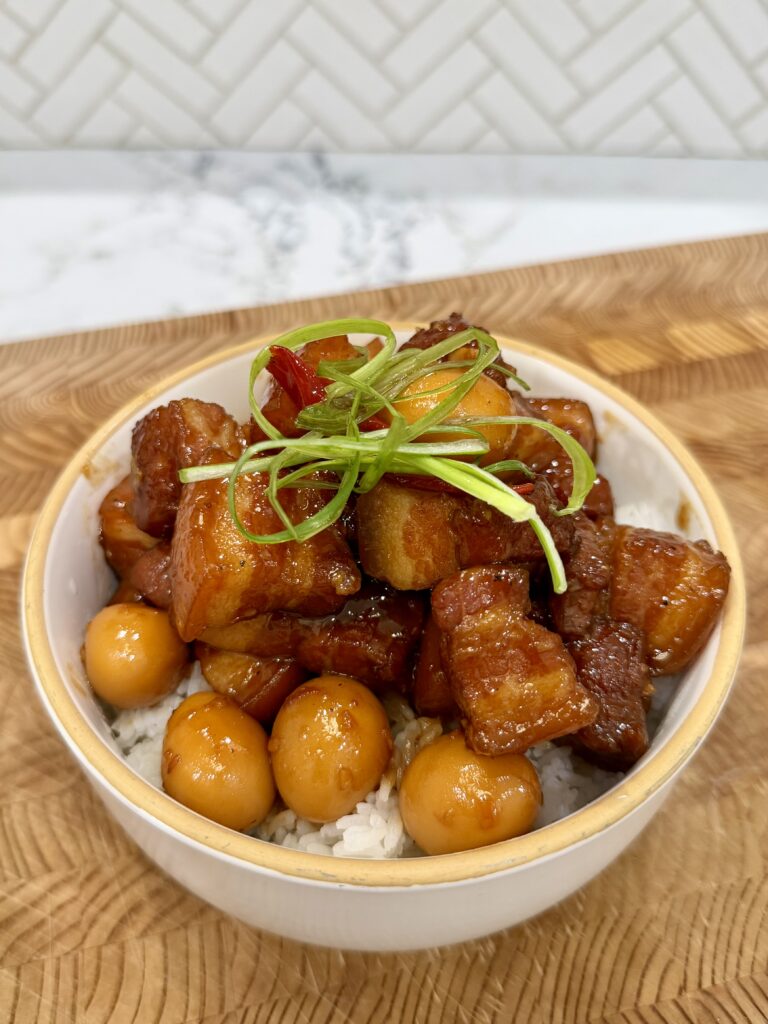
The smell of pork belly slowly braising in a mix of coconut water, fish sauce, and caramelized sugar would fill the kitchen, making its way through every corner of the house and announcing dinner time in the best possible way. Every family has its own twist on the recipe, but this one is my favorite—a perfect balance of salty, sweet, and savory with a deep, rich sauce that makes you want to scoop every last bit onto your bowl of rice. What makes it even better is that the longer it simmers, the more the flavors meld together, and by the end, you’re left with a dish that’s beyond words.
The beauty of this dish lies in the simplicity of the ingredients. Pork belly—ideally the cut with the right amount of fat—is essential to getting that juicy, tender texture. The slow braising allows the fat to break down, infusing the meat with flavor and creating that perfect melt-in-your-mouth experience. The addition of eggs (which you can hard-boil and braise in the same pot) takes the dish to another level, allowing them to soak up all the rich, savory sauce and become little flavor bombs. My mom would use regular chicken eggs in this dish, but I’m a much bigger fan of quail eggs specifically canned quail eggs because it does not harden, so the yolk keeps its creamy consistency through braising.
What makes thịt kho so special is that it’s more than just a meal—it’s a celebration of Vietnamese home cooking. It’s a dish that brings families together around the table, sharing stories, laughter, and, of course, extra servings of rice to soak up all that delicious sauce. There’s something magical about braising pork belly low and slow, allowing time for the sauce to deepen and thicken, making the meal feel like it was made with love and patience—just like the best childhood memories.
So, if you’re craving a dish that’s both nostalgic and comforting, this Vietnamese braised pork belly is your answer. It’s the perfect dish for sharing with loved ones, or simply for indulging in a moment of personal comfort. Every bite is a reminder of the love and care that goes into making a meal from the heart, and it’s one that I’m excited to pass on to the next generation, just as it was passed down to me. Whether you’re making it for the first time or bringing back a family tradition, this recipe is sure to become a favorite in your household too.
Ingredients and Why They Matter
Pork Belly
Pork belly provides rich, tender meat and rendered fat that creates the signature silky texture of Thịt Kho.
Brown Sugar
Brown sugar helps build the caramelized base and adds warm sweetness that balances the savory sauces.
Fish Sauce
Fish sauce delivers essential Vietnamese umami and saltiness that defines the dish.
Oyster Sauce
Oyster sauce adds depth and mild sweetness, enriching the braising liquid.
Soy Sauce
Soy sauce provides additional savory seasoning and color.
Dark Soy Sauce
Dark soy sauce deepens the color of the braise and adds subtle molasses-like richness.
Black Pepper
Adds gentle warmth and balances the richness of the pork.
Garlic
Garlic brings aromatic depth and enhances the savory profile.
Minced Shallot
Shallot adds mild sweetness and fragrance that builds the flavor base.
Sprite, Coconut Water, or Coconut Soda
This is the secret braising liquid that adds light sweetness and helps tenderize the pork while creating a glossy sauce.
Water
Water helps control the braising consistency and prevents the sauce from reducing too quickly.
Quail Eggs
Quail eggs soak up the savory caramel sauce and add creamy bites throughout the dish.
Thai Chilies
Thai chilies add optional heat that balances the richness.
Green Onions
Green onions add fresh brightness and a mild onion flavor that balances the richness of the braised pork while providing a clean finishing touch.
Substitutions
- Regular boiled eggs can replace quail eggs.
- Coconut soda is the most traditional liquid, but Sprite or coconut water works well.
- Palm sugar can replace brown sugar.
- Low-sodium soy sauce can be used to control saltiness.
- Skip Thai chilies for a non-spicy version.
Stovetop vs Instant Pot
Stovetop Method
The stovetop method produces the most traditional flavor and allows the sauce to reduce slowly and naturally. This method gives you better control over caramelization and texture, but it takes longer.
Best for:
- Authentic texture
- Deeper caramel flavor
- Weekend cooking
Instant Pot Method
The Instant Pot dramatically reduces cooking time while still producing tender pork. The sauce may be slightly lighter and may need a final simmer to thicken.
Best for:
- Busy weeknights
- Faster cooking
- Meal prep
Sauce Reduction and Adjusting Seasoning
One of the most important things to know when making Thịt Kho is that the final salt level depends heavily on how much you reduce the sauce. As the braising liquid cooks down, the flavors concentrate and naturally become more savory and intense. If you prefer a lighter, more brothy sauce, you can season a bit more aggressively upfront. But if you like your Thịt Kho thick, glossy, and sticky, it is safer to start slightly lighter on the fish sauce.
Personally, I love my Thịt Kho on the more reduced, sticky side, so I intentionally use a little less fish sauce at the beginning to prevent the sauce from becoming too salty as it tightens. The good news is you can always adjust at the end. Once the pork is fork tender and the sauce has reduced to your liking, give it a taste and add a small splash of fish sauce if you want more punch. This flexible approach helps you dial in the perfect balance every time.
Frequently Asked Questions
Why is my pork belly tough?
It likely needs more braising time. Pork belly becomes tender only after sufficient simmering.
Can I make Thịt Kho ahead of time?
Yes. It actually tastes better the next day as the flavors deepen.
Do I have to use quail eggs?
No. They are traditional but optional. Regular boiled eggs work well too.
Why add soda or coconut water?
The natural sugars help tenderize the pork and create the signature glossy sauce.
How do I store leftovers?
Store in an airtight container in the fridge for up to 4 days. Reheat gently on the stovetop.
4
servings10
minutes45
minutes55
minutesIngredients
2 lbs 2 pork belly
1/4 cup 1/4 brown sugar
2 tbsp 2 fish sauce
1 tbsp 1 oyster sauce
1/2 tbsp 1/2 soy sauce
1/2 tbsp 1/2 dark soy sauce
1/2 tsp 1/2 black pepper
4 4 garlic cloves, minced
1 tbsp 1 minced shallot
1 can 1 sprite, coconut water, or coconut soda
1 cup 1 water (add more if needed)
1 can 1 quail eggs
2 2 thai chilies
2 tbsp 2 green onions
Directions
- Marinate the Pork
In a large bowl, combine pork belly chunks (about ½-inch thick) with minced garlic, minced shallots, fish sauce, soy sauce, dark soy sauce, oyster sauce, and black pepper. Mix well to coat evenly and let marinate for at least 15 minutes (or up to overnight for deeper flavor). - Caramelize the Sugar
Heat a wok or heavy pot over medium heat. Add the brown sugar and cook for 20–30 seconds, stirring gently, until the sugar melts and begins to caramelize. Watch carefully to avoid burning. - Add and Sear the Pork
Immediately add the marinated pork belly to the caramelized sugar. Toss to coat, then sear for 3–5 minutes until the pork begins to brown and render some fat. - Add Braising Liquid
Pour in the coconut soda followed by the water. Stir to combine and bring to a gentle simmer. - Braise
Reduce heat to low, cover partially, and braise for about 45 minutes, or until the pork belly is fork-tender and the sauce has slightly reduced. Stir occasionally. Skim off any excess oil/fat rendered from the pork belly. - Add Eggs
Add the quail eggs during the last 10 minutes of braising so they can soak up the flavorful sauce. - Finish and Garnish
Stir in Thai chilies (if using) and simmer briefly. Turn off heat and finish with a generous sprinkle of sliced green onions. - Serve
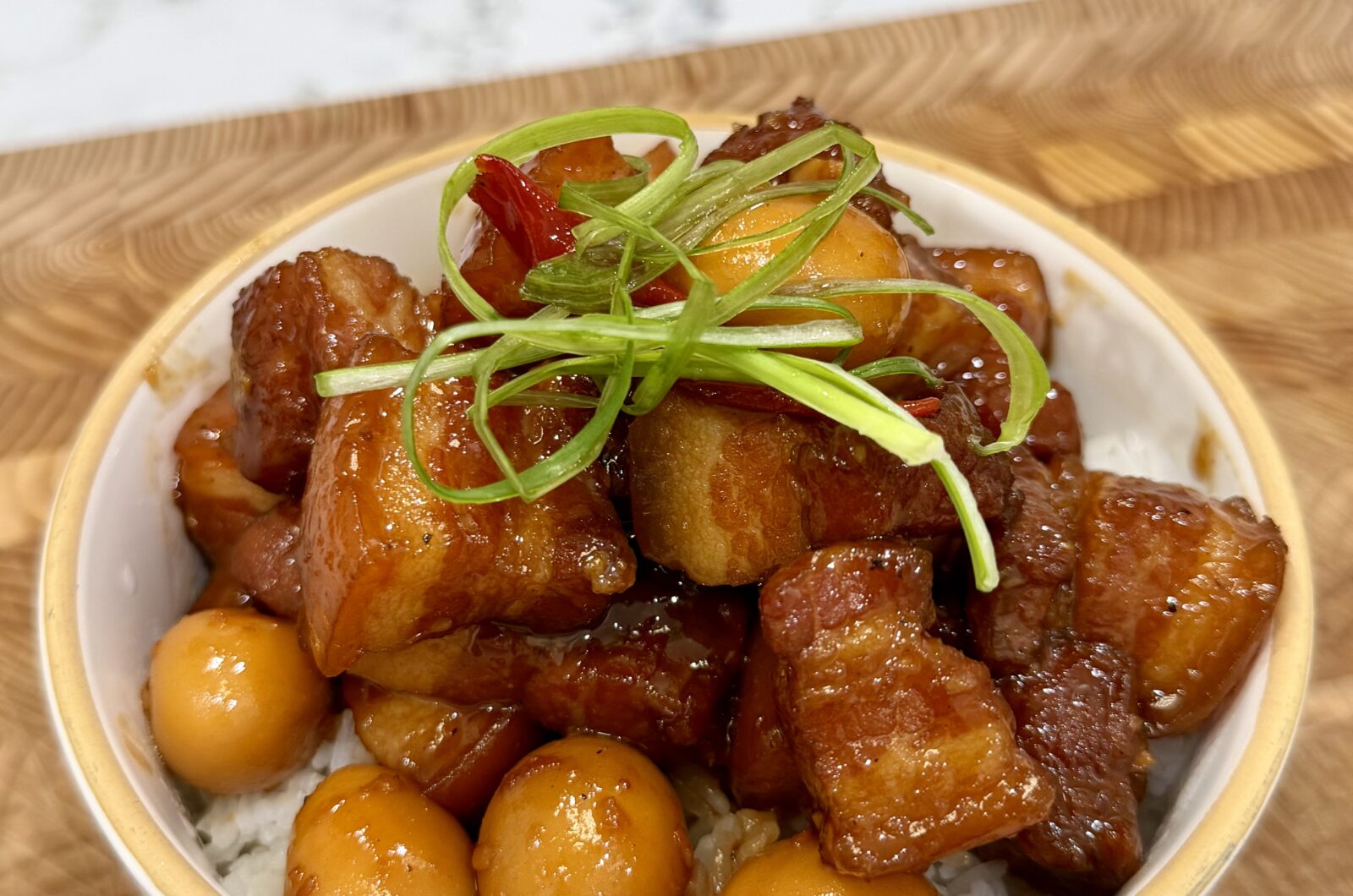
Serve hot over steamed rice with plenty of the caramelized sauce.